So this is going to be a slightly different wine review than normal. Rather than focusing on one wine and the food pairing, we’re going to be talking about several. While in Reims, I had the opportunity to taste several type of champagne, some quite good and others not so much. I went on three champagne tours: Mumm, Charles Cazanove and Castellane. Between the three of them, I have some good news and some bad news. Firstly, the best of these champagnes is easily available in the United States. However, it’s also the most expensive.
Mumm
Here, I had the chance to taste two: Mumm Cordon Rouge, their traditional brut and a Mumm Millisimé 2004, a vintage made from only the 2004 harvest.
Mumm Cordon Rouge
ABV: 12.5%
Composition: 45% Pinot Noir, 25% Pinot Meunier, 30% Chardonnay
There is something different about Mumm champagne and which I think is what makes it the best that I tasted. Mumm champagne is actually fermented three times rather than twice. The first is obviously the fermentation that turns the grape juice into wine and the last is the prise de mousse , in which the wine becomes champagne. However, in between these two stages, the wine undergoes a mallo-lactic fermentation. For those of you who have not taken Latin, lacto- means milk. It’s a fermentation that makes the champagne less acidic and creamier.
The Cordon Rouge was excellent—tart enough, creamy enough, with a lively amount of bubbles. For someone whose main complaint against champagne is that it was too dry, the mallo-lactic fermentation is excellent. But, of course and unfortunately , the millisimé is even better. It has been aged longer, making even more of the dryness disappear. Finally, the millisimé contains only Pinot Noir and Chardonnay, giving it a higher quality and more of the “refinement” that the Chardonnay brings.
Finally, there’s one last reason that I pefer to buy Mumm—it also seems to be one of the few champagne houses that still owns its own vineyards, sourcing 80% of its grapes from their own estate’s vines.
Charles Cazanove
At Cazanove, I tried three types of champagne: a traditional brut, a rosé, and a demi-sec. The brut was champagne—more acidic than Mumm. It’s made of 10% Chardonnay, 60% Pinot Noir, 30% Pinot Meunier, so it really should have tasted fruitier than it was, but all I got was champagne taste.
The rosé, however, struck me as bizarre. It’s made by mixing a still red wine with regular champagne. To me, it tasted like weak red wine. With bubbles. It was weird. I think I’ll have to give it another try another time maybe.
Finally, the demi-sec was incredibly sweet. I really couldn’t manage to drink it. Unlike some sweet wines, you really didn’t taste anything but sugar.
Castellane
I tried three champagnes here, but unfortunately there a little fuzzy. They were very generous servings and I hadn’t eaten a lot that day. I tried their traditional brut, their millesimé (2004) and their special cuvee (2002). The Castellane brut is composed of 33% Pinot Noir, 33% Pinot Meunier and 33% Chardonnay. Unlike Charles Cazanove, I did taste the predominance of “red wine,” making for a fruitier champagne. It was pretty nice for someone who once again, does not particular care for the dryness of champagne.
Their millesimé was also excellent—a bit more “refined” with a higher amount of Chardonnay, but I have to say that I preferred the Brut, since it had more unique taste.
sparkling
Tuesday, December 6, 2011


Thoughts from a bus stop: or more ways in which my students will get themselves killed
Recently, my host professor at Georges Chaumeton has had meetings after school, so the atelier was cancelled. This means I’ve ended taking the bus home at five p.m. at the same time as all the middle school students. At the Grives bus stop, there are usually about thirty students waiting without any kind of adult supervision. (I don’t count. My own students who know the professor is right next door don’t listen to me sometimes, I doubt this lot would.)
Lot is possibly not the best word. Horde maybe? Stampede? A little goofing around is one thing, but this bus stop is on the Route d’Albi, a regional highway. (For those of you who live in my area, it would be the equivalent of Route 100 or maybe Route 23). These kids are darting back and forth through traffic and jokingly pretending to throw each other in front of cars. They get into silly fights and run around without noticing their path takes them extremely close to, and sometimes into the road.
Conclusion: The French students who don’t die in a fire will probably be hit by cars.
On a less morbid note, here are my other observations.
Firstly, the unexpected positive byproduct of this is that I’ve now memorized the various French emergency numbers: 15 for SAMU (medical aid inside the house), 17 for the police and 18 for the pompiers (the fire department and medical aid outside the house).
Secondly, seeing a seventh grader trying to look tough with this on his head is pretty hysterical.
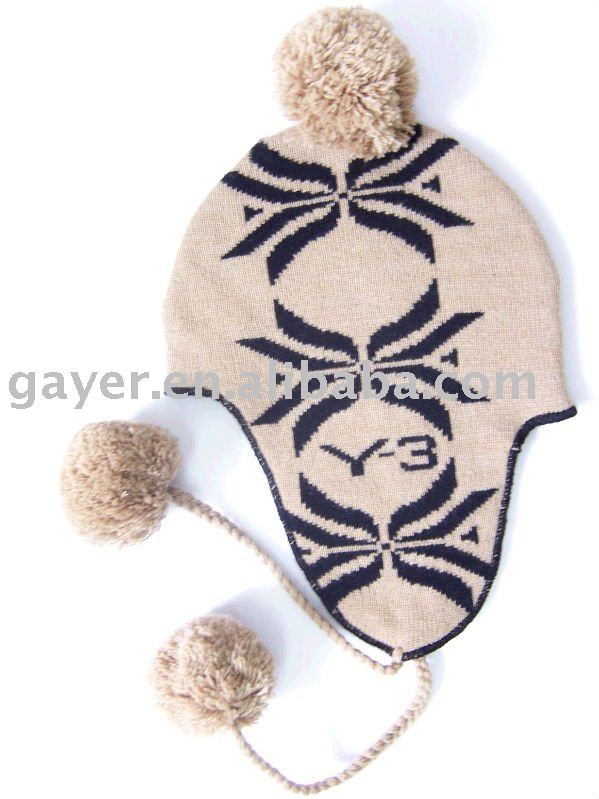
Thirdly, I have the exact same sweater as one of my students.
Monday, November 28, 2011
Thanksgiving in Toulouse

That's pumpkin pie!
So I know this blog post is late, but I wanted to wish everyone a happy Thanksgiving. Despite how incredibly frustrating French bureaucracy1 can be at times and how much I may want to strangle my students2, I am incredibly thankful to be here. I have friends and family here; I have a job that is interesting and challenging and will help me do what I want to do in life. I am in France, land of food and wine.
So, in that spirit, I wanted to celebrate Thanksgiving even though I wasn’t in the United States. When the weather started to get cold and the leaves started to turn colors, I couldn’t help but think about turkey and pumpkin pie. Why not do it here? The idea of cooking the entirety of Thanksgiving dinner sounded pretty terrifying. Having helped my mom prepare Thanksgiving last year, I had a sense of how much work it was. However, there were other American assistants here. I was willing to bet they wanted to celebrate Thanksgiving too.
So I told my guests that pumpkin pie and turkey were on me, and asked them each to bring something. They were game and I quickly received offers of sweet potatoes, stuffing, cranberry sauce, salad and…Thanksgiving bourbon. Okay then.
The turkey was my major concern. I had no idea if I could get a full-sized bird in France or how much it would cost. Even if I did get an entire bird, how was I going to carve it? Would it even fit in Therese’s oven? What recipe was I going to use?
I went to grocery stores and stared at the poultry section until my fingers went numb from cold. I perused recipes, talked to my host mother, had her call the butcher, considered making chicken instead. Then I got an envelope in the mail. My mother, on a whim, had decided to send me the November issue of Bon Appetit. On the cover was a gorgeous bird, red-brown from the oven and a long cider marinade.

That. I was going to make that. One thing was decided then. It had to be turkey. I found massive turkey breasts at Auchan and bought four of them. I gritted my teeth and prayed that fermented French cider was going to be a decent enough equivalent to sweet nonalcoholic American cider. I bit my lip at the more “Asian” aspects of the recipe and hoped I wasn’t ruining anything by leaving out the scallions. I went searching for other recipes to find a cooking time and temperature, since I wasn’t cooking a whole bird. Nothing was particularly certain.
I did a test.
Perfect. Tender and flavorful, with every spice noticeable but not overpowering. I guess that something to be thankful for too. Sometimes, when you need everything to turn out exactly the way it should be, it does. The dinner itself followed the same pattern. The stuffing was perfect; the sweet potatoes were cooked but not too mushy. One of the assistants even managed to make cranberry sauce using some sort of weird Scandinavian berry. It was delicious-- and I don't even like cranberry sauce. It was a wonderful evening with wonderful company.

Happy Thanksgiving everyone.
1-“Declare your primary practitioner now” from my school, “no, do it when you go to see him for the first time” from the Rectorat, “We need your declaration of primary practitioner by the 17th” in a letter from Social Security that I received on the 15th
2-(“What did you understand? Can someone repeat what I said? How about in French, huh? Can anyone explain what I said in French? Qu’est-ce que vous avez compris?” *Blank stares*)
Wine Review: White Loire Valley
(I haven't forgotten about you, Internet peoples! I'm sorry!)
So, after lingering in Bordeaux for a very long time, we're finally moving on to another region-- the Loire Valley. Home of castles, cathedrals and the French accent reputed to be "the most perfect" in the country, Loire also offers up some spectacular wine. At the moment, the first one we're trying is a white Sancerre.
The Wine

Pierre Chanau Blanc 2009
Secondly, I added capers and garlic to the sauce. I love garlic and chicken piccata just isn't chicken piccata without capers. I left out the mushrooms this time, though I could have easily put them (or artichoke hearts) in.
The Verdict
The Sancerre was excellent, though I admit this may partially come from the fact that I adore Sauvignon Blanc in general. However, the Sancerre didn't have the creaminess you get from a New World Sauvignon Blanc such as Cupcake Winery's. Instead, there was a surprisingly mineral refreshment, accompanied by some citrus-- lemon, green apple and grapefruit as well as some floral notes.
However, it wasn't quite as spectaculer as the Sancerre I drank at L'Assiette, but that might be for two reasons. Sancerre is not a popular white in the Southwest, so there isn't a great selection. There was literally only one Sancerre in the entire section (which takes up two complete aisles in Auchan). Also, Sancerre's expensive, so any award-winning wine was beyond my self-imposed budget of ten euros a bottle.
Ultimately, the mineral quality of the Sancerre worked well with the piccata. It gave the wine the structure to stand up to the acidity of the dish and to cut through the creaminess. A excellent wine, but with a small price concern. Not going to stop me from buying another bottle though!
So, after lingering in Bordeaux for a very long time, we're finally moving on to another region-- the Loire Valley. Home of castles, cathedrals and the French accent reputed to be "the most perfect" in the country, Loire also offers up some spectacular wine. At the moment, the first one we're trying is a white Sancerre.
The Wine

Pierre Chanau Blanc 2009
Origin: Loire Valley
AOC: Sancerre
ABV: 12.5%
Varietals: 100% Sauvignon Blanc
Serve: at cool room temperature, with shellfish or fish
The Food
Secondly, I added capers and garlic to the sauce. I love garlic and chicken piccata just isn't chicken piccata without capers. I left out the mushrooms this time, though I could have easily put them (or artichoke hearts) in.
The Verdict
The Sancerre was excellent, though I admit this may partially come from the fact that I adore Sauvignon Blanc in general. However, the Sancerre didn't have the creaminess you get from a New World Sauvignon Blanc such as Cupcake Winery's. Instead, there was a surprisingly mineral refreshment, accompanied by some citrus-- lemon, green apple and grapefruit as well as some floral notes.
However, it wasn't quite as spectaculer as the Sancerre I drank at L'Assiette, but that might be for two reasons. Sancerre is not a popular white in the Southwest, so there isn't a great selection. There was literally only one Sancerre in the entire section (which takes up two complete aisles in Auchan). Also, Sancerre's expensive, so any award-winning wine was beyond my self-imposed budget of ten euros a bottle.
Ultimately, the mineral quality of the Sancerre worked well with the piccata. It gave the wine the structure to stand up to the acidity of the dish and to cut through the creaminess. A excellent wine, but with a small price concern. Not going to stop me from buying another bottle though!
Monday, November 14, 2011
More Cultural Differences: Or, Why all My Students Will Die in a Fire
I had class at Chaumeton again today. Although discipline was slightly better, thanks to my teacher having spoken personally to some of the worse students, they were still sort of loud. Getting them to shut up long enough for me to give instructions is, um, interesting.
However, the real point of this blog post is that there was a fire alarm. I, accustomed to American fire alarms, took my roll sheet and a pen and started waving the students to the door—only to watch them stall, pack their stuff up, chat amongst themselves and amble in the direction of the exit. When we got to the staircase, I then saw evacuating students leave the line to go back into the building. When I yelled at them to go outside, they seemed very confused.
“I’m going to the bathroom,” one told me. “I’ll be out in a minute.”
Well, I certainly hope the building isn’t actually on fire then.
My host professor seemed equally nonchalant. When I asked her if she could take roll, she shrugged, leaning against the wall of the school. “We should but…” She waved a hand. “They’re out there somewhere.”
Let me clarify. This was not a fire drill. Someone had pulled the fire alarm, so we really had no way of knowing if the building was on fire or someone was being a jackass. Despite this, the students only reluctantly left the building (with the beforementioned re-entries) and the teachers were clumped together chatting. I think I was the only person to verify that all my students were out.
A fire alarm in the States is much more serious. The students leave quickly and relatively quietly; the professor ensures that her students are all accounted for and well away from the building (which, I will remind you, is potentially on fire) and the fire company usually shows up to verify that it’s safe before anyone is allowed to go back into the building. Yes, this is usually on a giant waste of time and often means standing outside in the cold jumping up and down to stay warm, but on the off-chance that the fire alarm isn’t just someone being a jackass, at least no one is going to die.
Wednesday, November 9, 2011
Champagne: How Champagne is made and the best champagne tours in Reims and Epernay

Musée de la Reddition and the Cathedral aside, this is really why people come to Reims. Champagne. Reims and Epernay, a small city about a twenty minute train ride away, are the capitals of bubbly.
Most people know how wine is made—the fermentation of grapes so that the sugar turns into alcohol. But how is Champagne made? It’s a wine, yes, but how does it end up carbonated? The short answer is with a lot of work.
Here’s the long version.
According to AOC regulations, only three grapes can be used to make champagne: Pinot Noir, Pinot Meunier and Chardonnay. Of these three grapes, the two Pinots are red-skinned grapes with white juice, whereas Chardonnay is a white-skinned grape with white juice.
Most champagne houses either own land or hold contracts in multiple appellations (different areas with different soil, amount of rain and sun exposure, resulting in a slightly different harvest with thus a slightly different flavor to the wine produced.) When the harvest comes, these grapes are picked and pressed as quickly as possible, so that the red-tinted skin from Pinot Noir and Pinot Meunier doesn’t have a change to “stain” the juice.
The juice is then shipped to the champagne house where it undergoes the first fermentation and turns into wine. At this point, the wine is still separated by appellation and by varietal (type of grape.) At this point, the cellarmaster tastes the various wines. Based on the quality of the produced wine, he’ll decide to make a millesimé (a vintage) or regular champagne.
He’ll choose various wines and blend them together to produce the champagne of that year that closely approximates the house style. (For example, Mumm champagne is said to be refined and creamy whereas Charles Cazanove is said to be fruitier.) If he is making a regular wine, this could also include wines from prior harvests—called reserve wine. For a millesimé, the cellarmaster has decided that this year’s harvest was exceptional enough that he will only use this year’s harvest. Thus, vintage champagne will carry the year of the harvest on the bottle.
The wine will be bottled along with a little extra sugar and yeast. It is then left to age in the cave for at least fifteen months for non-vintage champagne and at least three years for vintage champagne. Some champagne houses, especially the big ones, will age much longer than this. During this time, the wine undergoes a second fermentation in the bottle. Since the bottle is capped, there is no way for the carbon dioxide produced as a byproduct of the reaction to escape. Thus, it dissolves into the wine instead. The “bubbles” in champagne are the carbon dioxide coming out of solution upon the release of pressure and exposure to air.
This, however, leaves the wine maker with a problem. There is dead yeast in his bottle of wine--- and that’s pretty gross. Seriously, would you drink a bottle of champagne with that stuck to the side?

So, the champagne is then “riddled.” Originally done by hand and now done by machine, riddling means that a bottle of champagne is slowly turned from side to side and moved from a horizontal position to a vertical. This loosens the yeast from the side of the bottle and then it slides down into the neck. Before machinery, there was a person who then turned the bottle back upright and opened it, allowing the pressure to force the dead yeast out. However, this took a very long time and resulted in the loss of some champagne. Today, the very tip of the bottle is dipped in a chilling solution, causing the yeast (and a little bit of champagne) to freeze. When the bottle is opened, only the ice cube pops out. No mess!
Finally, before we put the cork in and send our champagne off to be sold, there is one final step. A small amount of still wine and sugar is added, called the liquor of dosage. This determines what type of champagne it is: extra brut (no sugar added), brut (6-10 grams added, replicating the amount of sugar in the grapes), sec (sweeter) and demi-sec (sweetest).
You will learn all of this if you go on one of the many champagne house tours. Mumm, Tattinger, Moet et Chandon, Veuve Cliquot, Dom Perignon, Pommery, etc--- they all have houses in either Reims or Epernay. Some require calling in advance and do much smaller groups (Mumm, Veuve, Ruinart) while others you can probably call the day of and still get in (Castellane, Charles Cazanove.) Essentially, the best way to guess? If you’ve heard of the champagne, you should call in advance.
However, this is not to say that the best tours are necessarily the ones where you call in advance. Or that the best tours are done by the houses that produce the best champagne. I went on three champagne tours: Mumm, Charles Cazanove and Castellane.
My recommendation overall is Castellane. Although it’s located in Epernay instead of Reims, I think it’s definitely worth the trip. (For those of you who don’t want to go to Epernay, Mumm gives a very complete, elegant and interesting tour.) At Castellane, actually see the factory where the champagne is paid, including the riddling machine, the labeling machine and the freezing vats. The guides (or at least mine) are also fantastic—they seem to know everything and don’t mind answering questions.
Their museum is also excellent, showing you the machines they used in prior centuries as well as a whole range of old bottle and advertisement designs. Plus, you can climb up the Castellane tower.

While it is an awful lot of stairs to get up that high, you get a wonderful view.

The tour is 8.50 and you get one glass of champagne at the end, with the possibility of buying other tastings. Additionally, it’s not one of the most well-known houses, so you can really just show up and there will be tour openings. Though, one thing to pay attention to: Castellane is not on the Avenue de Champagne like all the other houses. It’s on a little road just off to one side, but if you take the Avenue de Champagne and keep walking, you’ll eventually see the tower.
Wine Review: Red Bordeaux—and moving beyond steak
I haven’t forgotten about my wine reviews. I was waiting for the right meal to bring out this baby—which, of course, didn’t happen. This weekend, I was going to open it for Saturday lunch and do the classic red Bordeaux pairing—steak. However, my host mother had forgotten our plans and poured a Burgundy she had open instead. Oh well. So the Bordeaux got pushed to dinner—with quiche Lorraine.
This is one of the main points I want to make with this wine review—red wine is surprisingly versatile. We hear about the importance of protein to soften a Bordeaux tannins, but seem to forget that there are other proteins than steak. The Chateau Blanchon 2009 came to the table with two meat-light dishes (quiche Lorraine and eggplant parmesan) and performed excellently with each one.
The Wine

Chateau Blanchon 2009
Origin: Bordeaux, Right Bank
AOC: Lussac Saint-Emilion
ABV: 14%
Awards: Gold Medal, Concours de Bordeaux 2010
Varietals: 60% Merlot, 40% Cabernet Sauvignon/Cabernet Franc
Aging: It doesn’t say, but I’m guessing okay!
Serve: at cool room temperature, decanted, with red meat or dark fowl
The Food
Quiche Lorraine (not this recipe, but close enough. Though, I do have to add, for the love of God, do not boil bacon. Gross.)
Quiche Lorraine comes from region of France furthest to the Northeast—which actually puts it pretty solidly in white wine territory, since the wine-producing regions around it are Alsace and Champagne. However, it has a pretty noticeable flavor (bacon) and plenty of protein to soften the tannins of a red. In fact, I’d be tempted to say a subtler white might not be able to cut through the occasionally cloying nature of this quiche, which is composed of eggs, butter, heavy cream and bacon. Oh, and there’s some flour in there too.
Dried boar sausage and magret de canard (the breast of a duck raised to make foie gras) as an appetizer.
Recipe following is not my strong point. There were a number of changes to this recipe. Firstly, I started with plain bread crumbs and seasoned them, because pre-seasoned breadcrumbs don’t exist in France. I added basil, salt, pepper and parmesan cheese. Secondly, I pan-fried the eggplant briefly in some oil because I was afraid the crumb coating wouldn’t stay crunchy in the oven otherwise. Finally, I didn’t have mozzarella cheese, so I compensated with an over-abundance of Parmesan.
The Verdict
To quote my host mother’s sister: “C’est un peu jeune, non? C’est dommage.” It’s a little young, so it was sort of a shame to open it now. Even with the use of a Vinturi, it was still very tannic.
The Blanchon opened with a nose of toast and dark chocolate, but if you really worked at it, you can pick up a dark fruit—blackberry or cassis maybe. Lighter-bodied than I expected (though I’m used to Malbecs and Zinfandels), but still fairly tannic.
I didn’t notice the toast upon tasting the Blanchon, but the dark chocolate and dark fruit continued throughout. Nice finish, if tannic.
It paired very well with the protein-heavy quiche. The egg and milk moderated the tannins and the bacon actually offered a very nice counterpoint to the flavor of the wine—since it’s an intense, savory flavor. As far as the eggplant parm went, the cheese offered the necessary protein and the tomato sauce gave the right amount of “big” flavor.
Overall, a good and surprisingly versatile wine, but needing maturity. If you were to pick up the bottle, hang onto it for a year or two. And decant!
Subscribe to:
Posts (Atom)